
Window & door repair and replacement
A window that drops shut. A patio door that takes two hands to open. A deadbolt that only turns when you lift the handle. We repair and replace windows and doors, and we’ll help you figure out how much of yours you can keep.
See our window and door projects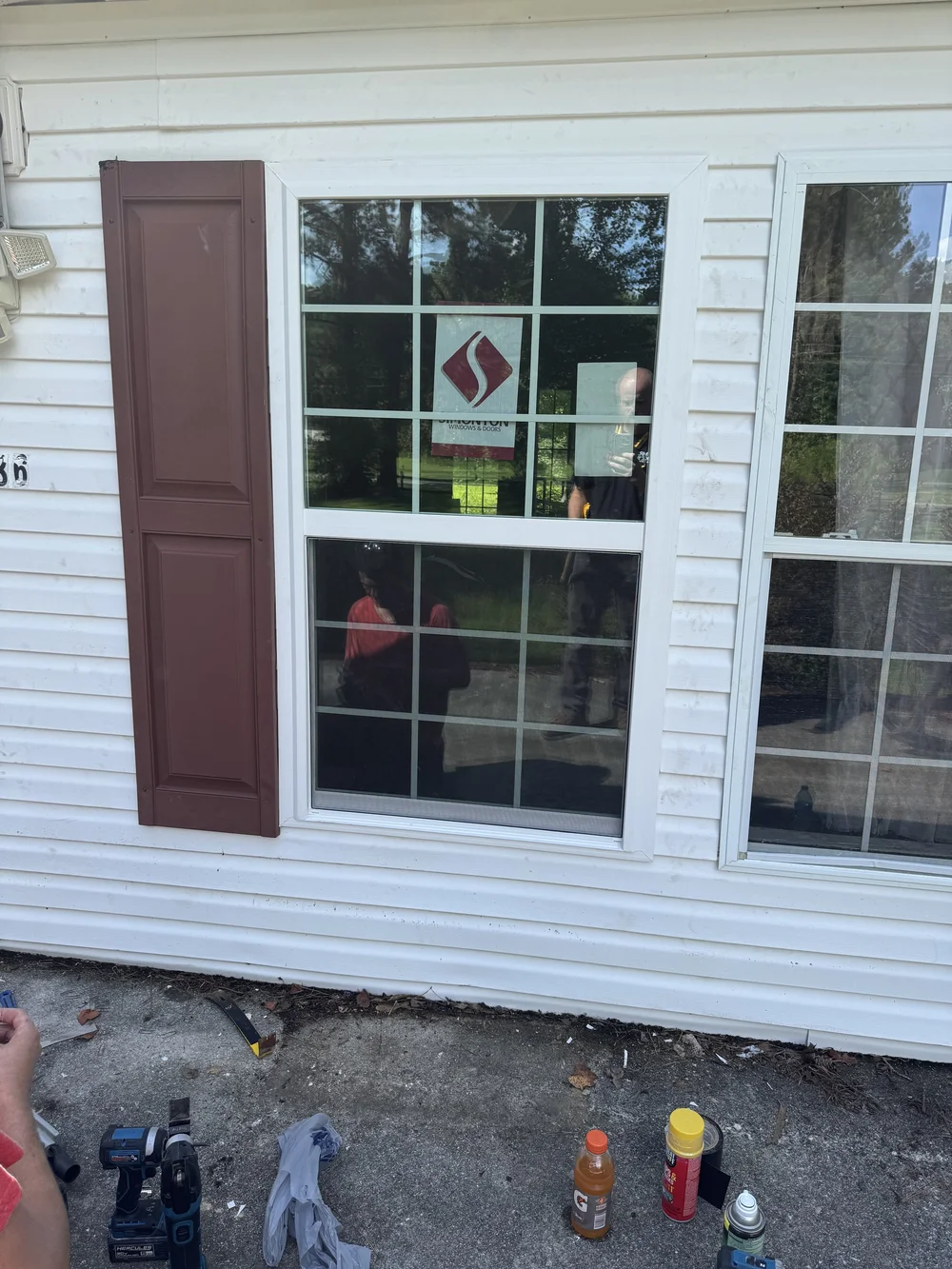
Sliding patio doors
“I can barely slide it open.”
Worn rollers, a damaged track, or a panel that sits unevenly can make a heavy glass door drag, grind, or stop partway. We can often repair the sliding mechanism and keep the existing door.
“It closes, but it won’t latch.”
The latch may be worn, or the panel may sit just low enough to miss the keeper in the frame. If you have to lift the handle end of the door to lock it, mention that when you call. Hardware or alignment repairs can often restore a secure latch.
When does a slider need replacement?
A damaged frame, a badly deteriorated sill, or hardware that’s no longer available can make a lasting repair impractical. We’ll explain what’s worn and whether a repair can give you a door that both glides and locks reliably.
Can my window be repaired?
The window won’t stay up
The moving part of a window is called the sash. In many windows, a balance supports its weight. When that support fails, the sash can feel unusually heavy or slide down as soon as you let go. If the sash and frame are sound and matching parts are available, we can often get it working again.
Broken tilt latches, locks that miss their catch, and cranks that turn without opening the window are also worth asking us about.
There’s fog inside the glass
Double-pane glass has two panes sealed around an insulating space. Moisture you can wipe off is on the surface. Haze or droplets trapped between the panes usually mean the glass seal has failed.
On many windows we can replace the sealed glass unit and keep the sash and frame. Some designs call for a replacement sash. The condition of the window and the parts available determine which option fits.
What goes back into an old wood window?
A wood frame can be a good candidate for either approach. Its condition matters more than its age.
An insert keeps the existing frame
An insert replacement window fits inside the old frame. If the wood is solid and the opening is square, this can preserve the interior casing and limit disturbance to siding and trim. The new frame sits inside the old one, so the visible glass area can be a little smaller.
A full-frame replacement starts at the opening
When the sill is soft, the frame is distorted, or water has damaged the opening, removing the entire unit allows the underlying damage to be addressed. A new-construction window commonly has an exterior mounting flange. It can suit an existing home when the wall is exposed, such as during siding replacement. Full-frame options also come without a flange.
Entry & interior doors
A rubbing corner, a loose hinge, or a draft under an exterior door may call for a repair. When the door itself is damaged, the condition of the frame helps narrow down the replacement options.
Door slab
The slab is the swinging panel. If an interior door has a hole in it but swung freely and latched properly before the damage, a compatible slab can reuse the sound frame and preserve your trim. Size, thickness, hinge locations, and latch position all matter.
Prehung door
A prehung door comes already hinged in a matching frame. It often makes sense for a new doorway, a wider opening, or an exterior door with a deteriorated jamb. If the wood is soft down by the threshold, the condition of the opening is part of the estimate.
Tell us what your window or door is doing.
“The slider catches halfway” or “the fog is between the panes” gives us a place to start. A photo of the full opening and a close-up of the problem can help us understand what you’re seeing.
Request an estimate